Decoding Team Launches for Window 5's Sent Object — Hind Mathematicians, a Hellas Scholar, and a First-Generation Drifter Join In
The TDA's Dimensional Survey Division announced on the 24th that it has formally formed a decoding team, centered at the Third Appraisal Center, to study the object recovered from Window 5, 'the Sword Country,' previously reported on the 20th — a folded paper bearing a drawing and symbols. The unusual line-up brings together a mathematics team from the Hind Federation, a Hellas scholar of ancient texts, and first-generation Drifter Shio Kishiura, 74. For now, the division has offered only a preliminary finding — that the symbols show a degree of regularity in how they're arranged — while the meaning of the characters and the subject of the drawing both remain unresolved. The division again stressed, 'This isn't a place to rush toward an answer.'
The TDA's Dimensional Survey Division announced on the 24th that it has formally formed a decoding team, based at the Third Appraisal Center, to examine the folded paper — bearing a drawing and symbols — recovered from Window 5, 'the Sword Country,' previously reported on the 20th. Four days after the recovery, the paper had remained, as previously reported, at the stage of fiber analysis; the division clarified that analyzing the material and analyzing what's written on it are separate tasks that can proceed at the same time, and said work on the symbols and drawing themselves has now begun.
The team brings together three strands. The Hind Federation's mathematics team, previously reported for its work decoding the markings on the provisional Lineage 148 metal pillar (led by Anirudh Rao, previously reported), is applying the same statistical methods to the Window 5 paper. Nikos Zafiras, 58, a Hellas historian who studies ancient 'Yuragi lore' texts, has come to Tokei for the first time under the framework of the 7th International Joint Study to join the effort. And Shio Kishiura, 74, the music teacher and first-generation Drifter previously reported in these pages, has been asked to weigh in on the drawing itself. A division official explained, "We've placed three perspectives side by side that have never been part of a decoding effort before — mathematics, textual scholarship, and lived experience. We don't intend to let any one of them settle the answer."
At the briefing on the 24th, Rao presented the results of just under a week of preliminary analysis of the symbols on the paper, which, as previously reported, resemble characters. "The symbols never appear alone — they're grouped into clusters of two to four, set off from one another. There's a pattern, hard to put down to chance, in how long the clusters run and which symbols tend to lead a cluster," Rao said. Distinguishing this from the 'carrying' rule confirmed at Lineage 148, she offered the view that "this may not be a notation for numbers, but something distinguishing sounds — perhaps syllables." She repeated the word "possibility" several times, stressing, "That a pattern exists, and what that pattern means, are entirely different flights of stairs."
The division official likewise held to caution: "Dr. Rao's finding is reassuring in that the symbols on the paper aren't random decoration. But this only means we've stood at the threshold of decoding." On the previously reported (September 26) resemblance in script between this and Window 1's 'ceremony' tablets, the official said this analysis made no direct comparison, repeating that "we aren't yet at a stage where comparison is possible."
Zafiras, visiting from Hellas, spoke about the simple line drawing on the paper — what appears to be a coastline with a tall rock or tower-like outline standing on it. "Some illustrations in Hellas's old 'Yuragi lore' texts also combine sea and rock in similar ways. Only the composition feels similar to me," he said — immediately adding his own caveat: "That's an impression, not a scholarly basis. Within our own field, we haven't settled how much of the Hellas lore is genuine record and how much is later embellishment." The division said it would note the observation about composition but would draw no conclusions from it, adding that while previously reported hints of geographic or cultural proximity exist, as with Lineage 31, 'the Neighboring World,' it would avoid any hasty connection here too.
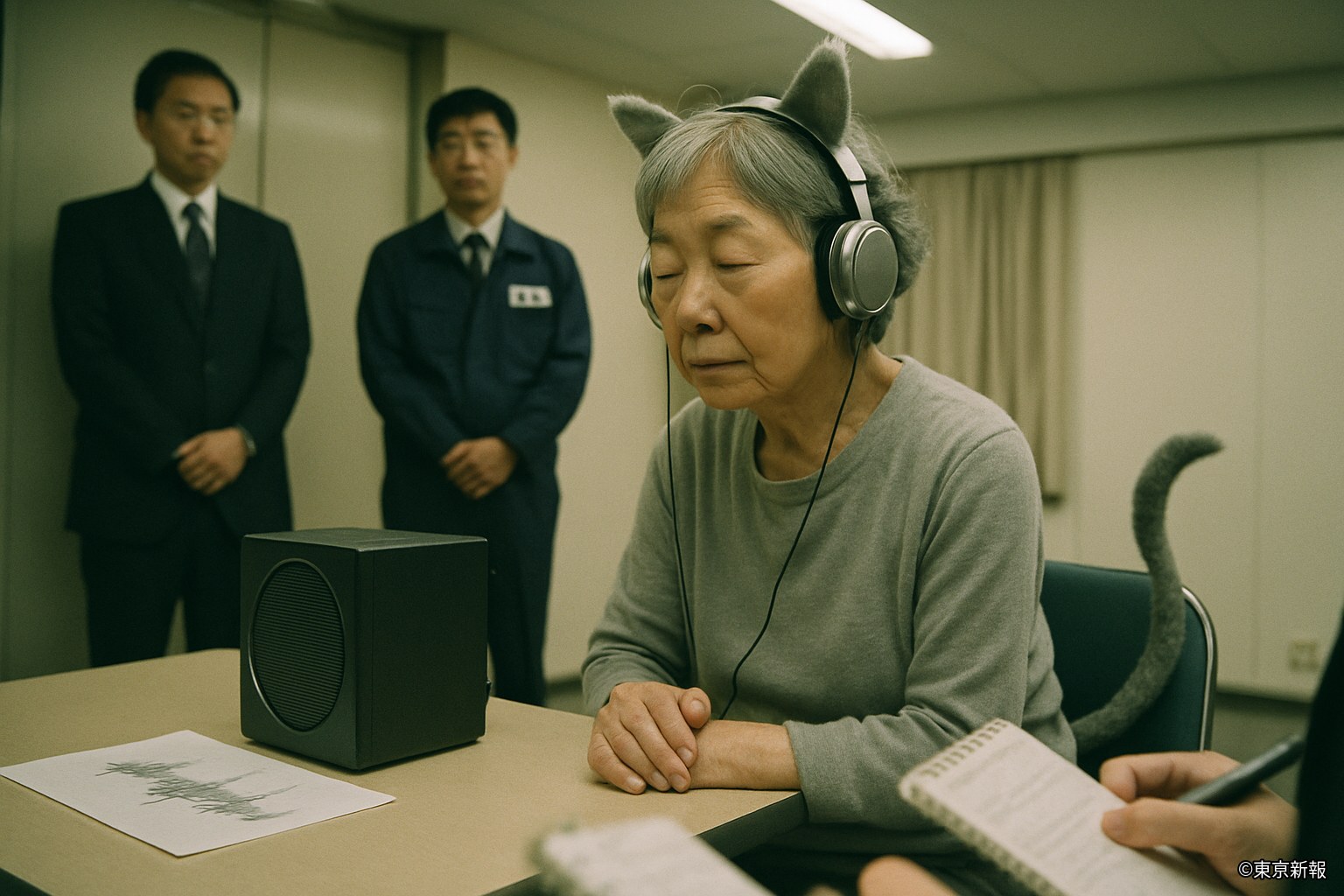
Kishiura spoke plainly about the day she first saw the drawing: "Honestly, nothing came back to me clearly." As previously reported, she had said in early October that the recorded sound from Window 5 resembled the melody of the 'shore lullaby,' and on the 21st, King Kaie III of Rukai, visiting Tokei, had called at her home and listened to her sing it. "With the lullaby, the feeling of nostalgia came first, from the sound. But this drawing — I can't say it's familiar, and I can't say it's unfamiliar either. It feels like I've seen it, and like I haven't, and that left me at a loss," Kishiura said.
Even so, the division said it had included Kishiura on the team because "a first-generation Drifter's memory and sense of things can offer a kind of clue that mathematics and textual scholarship can't measure." Kishiura herself said, "I think my part is not to pretend to understand. If I was called here to say, plainly, what I don't know, then that I can do." Technician Toru Yuzuki, 31, previously reported, who was present, reportedly gave a small nod at that.
Yuzuki, who has tracked Window 5's tablet-raising behavior throughout, said of the team's first sitting on the 24th, "Being present as a mathematician, a textual scholar, and the person living this history all looked at the same paper at once — that was itself a first for me on this beat. I know this isn't a place for anyone to call out the right answer, but when three lines of sight converge like that, it's hard not to feel something has moved closer. I keep telling myself to write about that feeling with care."
As previously reported, the resemblance between Window 5's recording and Kishiura's lullaby has stoked a simmering public debate over whether 'the Sword Country' might be Drifters' ancestral world. Following the 24th's briefing, that debate flared up again online with news of the decoding team's launch, but the division cautioned once more: "Arguing over ancestry before any scholarly conclusion exists is premature. This team's purpose is to analyze the symbols and drawing on the paper, not to prove where the lineage originated." The team's progress is expected to be formally added to the agenda of the outside experts' review panel (chaired by Etsuko Kajiura, previously reported), set to hold its first meeting in early November.
Seiichi Minowa, 48, chief appraiser at the Third Appraisal Center, previously reported, said of the parallel tracks — ongoing fiber analysis of the paper itself, and the newly launched work on its symbols and drawing — "Finding out what the paper is and finding out what's written on it are different jobs, moving at different speeds. It will be a while yet before the two come together." The decoding team's next session is set for early next month, and the outlook that no conclusion will come within the year remains unchanged.
At the close of the 24th's briefing, the division said, "It hasn't even been proven yet whether this paper carries meaningful symbols or is simply decorative." But it added, "Even so, the premise that someone on the other side wanted to tell us something, and threw a tube to do it — that alone carries a weight the observation history of these five windows has never held before." What the convergence of three lines of sight, on the same sheet of paper, on this one day in October, will lead to by next month, no one can say.